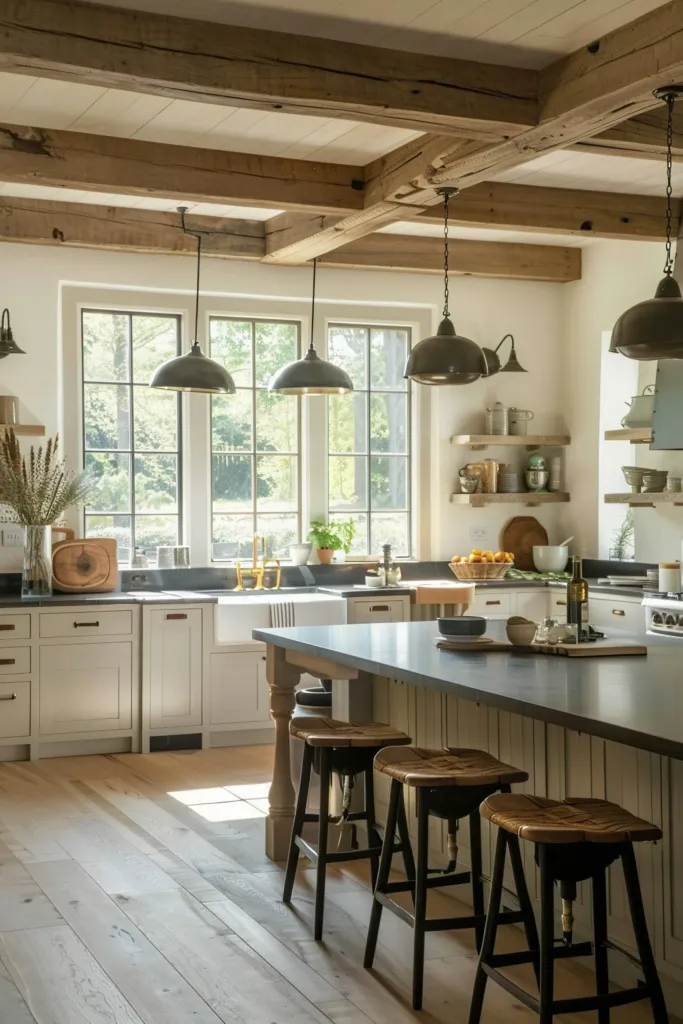
The Allure of Farmhouse Kitchens
Farmhouse kitchens evoke a sense of warmth, simplicity, and functionality that makes them a beloved style for many homeowners. They blend rustic charm with modern comfort, creating inviting spaces that are both aesthetically pleasing and practical for daily life. The appeal lies in the ability to create a cozy atmosphere, where family and friends can gather and enjoy meals. The core design philosophy behind farmhouse style is about embracing natural materials, neutral colors, and a lived-in feel, making it easy to create a comfortable and welcoming environment. This style is perfect for those seeking a retreat from the busyness of modern life, offering a space to relax and enjoy the simple pleasures of home.
Key Elements of Farmhouse Style
Understanding the key elements is essential for achieving the farmhouse look. This style is characterized by a blend of vintage and modern elements. Think exposed wood beams, apron-front sinks, and antique-inspired lighting fixtures. Furniture often features distressed finishes and simple, functional designs. Comfort is key, so look for soft textiles like linen and cotton in your kitchen. Incorporating these elements will create a cohesive and inviting space that feels both stylish and functional. It’s about curating a space that feels lived-in and loved, creating a welcoming atmosphere for anyone who enters.
Color Palette in Farmhouse Kitchens

The color palette plays a crucial role in defining the farmhouse aesthetic. The goal is to create a light, airy, and welcoming space. Neutral tones and muted colors are the cornerstone of the farmhouse look, providing a calming and versatile backdrop for your décor. These colors help to create a sense of spaciousness and allow other design elements to stand out.
Neutral Tones
Whites, creams, and soft grays form the foundation of a farmhouse kitchen. These neutral colors create a bright and airy atmosphere, making the space feel larger and more inviting. They also provide a versatile base that allows you to easily incorporate accent colors and patterns through accessories, such as artwork, textiles, and decorative items. Consider shades like warm whites and off-whites, which add a cozy feel without being stark. These neutral tones create a timeless appeal that won’t go out of style.
Warm Accents
While neutral tones are essential, warm accents prevent the space from feeling sterile. Incorporate colors like soft blues, sage greens, and muted yellows through textiles, artwork, and accessories. These colors add depth and personality without overwhelming the space. Natural wood tones from furniture and open shelving also provide warmth, creating a harmonious balance within the kitchen. Consider adding copper or bronze accents on lighting fixtures or cabinet hardware to add visual interest. These touches of color and warmth transform a neutral space into a welcoming and inviting farmhouse kitchen.
Essential Decor Ideas

Achieving the perfect farmhouse kitchen involves carefully selecting and incorporating key décor elements. From furniture choices to the use of open shelving, each decision plays a crucial role in creating the desired aesthetic. Focus on combining functionality with aesthetics to create a kitchen that is both beautiful and practical for everyday use. Paying attention to details like lighting, textiles, and accessories will make the space feel complete and welcoming. These elements work together to build the cozy and inviting environment that defines farmhouse style.
Furniture Selection
Choose furniture with simple lines, distressed finishes, and natural materials to capture the farmhouse aesthetic. A large farmhouse table with a wooden top is a perfect centerpiece for the kitchen, offering a space for family gatherings and casual meals. Consider incorporating chairs with a rustic or vintage style, like wooden chairs with spindle backs or metal chairs with distressed paint. For storage, choose cabinets with shaker-style doors or open shelving. This kind of furniture adds character and charm, enhancing the lived-in and welcoming feel of a farmhouse kitchen. Remember, the furniture should be functional while complementing the overall design.
Open Shelving
Open shelving is a staple of farmhouse kitchens, providing both storage and a decorative element. Use it to display dishware, glassware, and decorative items. Open shelves add a sense of airiness and allow you to showcase your favorite pieces. Opt for shelves made of reclaimed wood or painted in a neutral color to match your color scheme. Arrange items thoughtfully, mixing functional pieces with decorative accents to create a visually appealing and organized space. This is a great way to make your kitchen feel more open and welcoming, while still offering plenty of storage.
Textiles and Fabrics

Incorporate textiles made of natural fabrics like linen, cotton, and burlap to add warmth and texture. Use these materials for curtains, dish towels, and tablecloths. Look for patterns like gingham, stripes, or floral prints to add visual interest and a touch of vintage charm. Place a patterned rug in front of the sink or stove to add comfort and define the workspace. Textiles add softness and personality, making the kitchen feel cozy and inviting. They also can introduce pops of color and pattern to the otherwise neutral space.
Lighting Fixtures
Lighting is an essential element in farmhouse kitchen design. Use a combination of ambient, task, and accent lighting to create a well-lit and functional space. Consider using pendant lights above the kitchen island or dining table, and add sconces or chandeliers to create visual interest. Choose lighting fixtures with a rustic or vintage-inspired aesthetic, like metal lanterns or enamel shades. These fixtures not only provide illumination but also serve as decorative elements, enhancing the overall farmhouse appeal. Ensure your lighting enhances both the style and functionality of your kitchen.
Accessorizing Your Farmhouse Kitchen
Accessorizing your farmhouse kitchen is the key to adding personality and character. It is the finishing touch that brings the whole design together, making it feel more lived-in and welcoming. By focusing on incorporating rustic accents, vintage finds, and practical storage solutions, you can create a space that is both stylish and functional. Choosing the right accessories will reflect your personal style and make the kitchen the heart of your home.
Rustic Accents

Incorporate rustic accents to add warmth and character to your farmhouse kitchen. Consider using wooden cutting boards, antique scales, or vintage-inspired canisters to add charm. Metal accents, such as galvanized buckets or copper pots, create a sense of authenticity and add visual interest. These accents should be chosen carefully to complement the existing design elements and enhance the overall aesthetic. Position these accents strategically throughout the kitchen to make the space feel more inviting and lived-in. These rustic elements provide a connection to the past, creating a sense of timelessness.
Vintage Finds
Incorporating vintage finds is a great way to add personality and uniqueness to your farmhouse kitchen. Visit antique shops, flea markets, and online marketplaces to find unique treasures. Look for vintage signs, antique kitchen tools, or old enamelware. Display these items on open shelves or countertops to add character and a touch of nostalgia. Vintage finds create a story within your kitchen, making it feel more personal and authentic. Each piece should have its own history, bringing a unique element to your design, and giving your kitchen a one-of-a-kind appeal.
Practical Storage Solutions
While focusing on aesthetics, it is important to consider practical storage solutions. Use baskets, jars, and wooden boxes to organize your kitchen essentials. This not only adds a touch of rustic charm but also helps keep your kitchen tidy. Open shelving can be used to display dishware and cookbooks, making them easily accessible. Consider using a pegboard to organize cooking utensils, adding visual appeal and functionality. Practical storage solutions are essential for maintaining an organized and efficient kitchen while retaining the farmhouse charm.
Incorporating Natural Elements

Bringing natural elements into your farmhouse kitchen is essential for creating a warm, inviting, and authentic space. The farmhouse style celebrates the beauty of nature, so incorporating wood, stone, plants, and herbs will create a connection to the outdoors and enhance the overall aesthetic. By carefully selecting these elements, you can add layers of texture and visual interest, making the kitchen feel more comfortable and inviting.
Wood and Stone
Wood and stone are fundamental to the farmhouse aesthetic. Use wood for countertops, open shelving, and furniture, such as the farmhouse table, and for flooring, creating a sense of warmth and natural beauty. Incorporate stone through a backsplash or kitchen island to add texture and visual interest. The natural imperfections in the wood and stone give the kitchen a unique character. Choosing these natural materials ensures your kitchen feels connected to nature, creating an inviting and timeless appeal.
Plants and Herbs
Plants and herbs are perfect for adding a fresh and inviting touch to your farmhouse kitchen. Place potted herbs on a windowsill or countertop to add a pop of green and a pleasant aroma. Use trailing plants, like ivy, to soften the look of open shelving. Flowers, such as sunflowers or wildflowers, create a welcoming atmosphere. Incorporating these natural elements adds life and freshness to your kitchen, and they make it feel more connected to the outdoors. Plants can also purify the air and contribute to a healthier indoor environment.