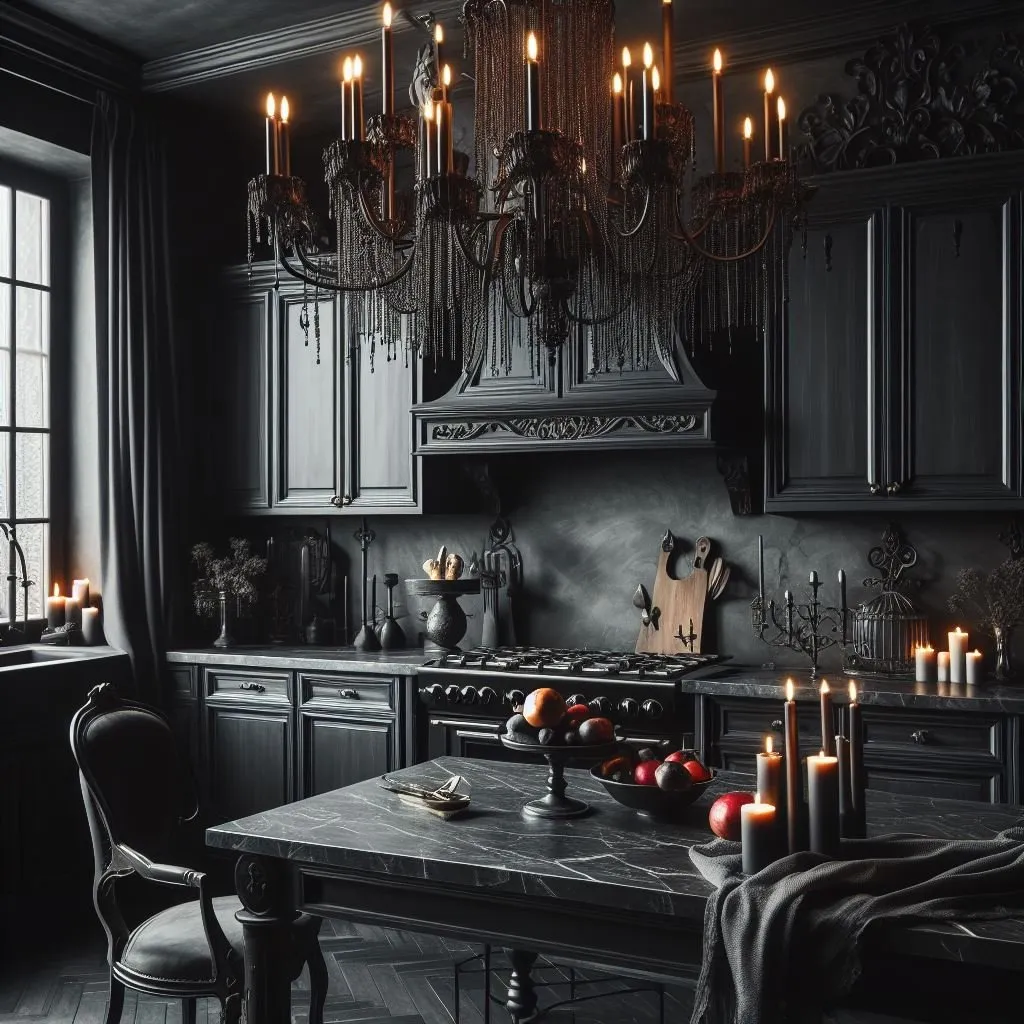
The Allure of Gothic Kitchen Decor
Gothic kitchen decor is experiencing a surge in popularity, captivating homeowners with its unique blend of dramatic aesthetics and historical richness. Unlike the bright, minimalist trends that have dominated interior design for years, gothic kitchens embrace darkness, intricate details, and a sense of timeless elegance. This style provides an escape from the ordinary, creating a space that feels both mysterious and inviting. The allure lies in its ability to evoke a sense of history and sophistication, offering a dramatic backdrop for both everyday living and special occasions. The gothic aesthetic is far from a fleeting trend it’s a statement, and it allows for a deeply personal expression of style, where each element contributes to a cohesive and visually stunning environment. Exploring this style is about discovering how to infuse your home with a sense of timeless charm.
Understanding the Gothic Aesthetic
The gothic aesthetic is rooted in the architecture and art of the medieval period, roughly spanning from the 12th to the 16th centuries. Characterized by grandeur and a focus on detail, this style is often associated with cathedrals, castles, and elaborate artwork. In the context of interior design, the gothic aesthetic translates into spaces that are rich in texture, color, and ornamentation. It is a style that seeks to evoke feelings of awe and wonder, utilizing elements that draw the eye and create a sense of drama. The key is understanding its elements, embracing its core values of depth, detail, and a touch of the theatrical. It’s a style that challenges conventions and invites you to create a space as unique as you are.
Key Features of Gothic Design

Key features of Gothic design include pointed arches, vaulted ceilings, and intricate tracery, all of which add verticality and complexity to a space. These elements, when applied to kitchen design, can create a sense of spaciousness and grandeur. Dark wood finishes, such as mahogany or walnut, are also essential, providing a rich, enveloping atmosphere. Furthermore, Gothic design frequently incorporates heavy, ornate details, such as carved moldings, elaborate hardware, and stained-glass accents. These elements contribute to the style’s opulence and visual interest, transforming an ordinary kitchen into a captivating space. Details are very important on this design style.
Color Palette and Material Choices
The gothic color palette typically revolves around deep, saturated hues such as black, burgundy, emerald green, and deep purples. These colors create a dramatic backdrop that enhances the intricate details of the design. When it comes to materials, dark woods are a staple, lending warmth and richness to the space. Stone, especially slate or granite, is another common choice, providing a sense of solidity and history. Textiles such as velvet and brocade can be used to add texture and luxury, while metallic accents, like wrought iron or bronze, introduce a touch of shine and elegance. The right color choices and materials will complete your gothic kitchen.
5 Gothic Kitchen Decor Ideas
Idea 1 Dark and Moody Ambiance

Creating a dark and moody ambiance is at the heart of Gothic kitchen decor. This can be achieved by using deep, rich colors on the walls, cabinetry, and even the ceiling. The goal is to envelop the space in a sense of mystery and intimacy. Remember that lighting plays a crucial role in this design; consider using dimmable lights to create different moods. Dark wood is very helpful in creating this. It instantly adds a layer of luxury.
Incorporating Dark Wood
Dark wood is a foundational element of Gothic design, adding depth and warmth to the kitchen. Consider dark-stained cabinets, exposed beams, or even a dark wood island to anchor the space. The richness of the wood provides a striking contrast to lighter elements, creating a visual balance that’s both elegant and inviting. Ensure that the wood’s grain is visible to appreciate its natural beauty and texture.
Using Dramatic Lighting
Dramatic lighting is essential for setting the mood in a gothic kitchen. Chandeliers, pendant lights with intricate details, and wall sconces can all add to the ambiance. The lighting should be warm and inviting, casting shadows that enhance the drama. Consider using dimmers to adjust the light levels according to the time of day or the mood you want to create. Avoid harsh, bright lighting, and instead, opt for layers of light.
Idea 2 Elegant and Ornate Details

Gothic kitchens often feature intricate details that elevate the design. These can include ornate moldings, carvings, and hardware. The goal is to infuse the space with a sense of luxury and craftsmanship. Adding ornate details will make your kitchen look expensive and luxurious. Each element should be carefully considered to ensure it complements the overall aesthetic and contributes to the kitchen’s unique character.
Adding Ornate Cabinetry
Ornate cabinetry can instantly transform a kitchen. Consider cabinets with detailed carvings, raised panels, or elaborate molding. If a full renovation isn’t feasible, adding decorative elements to existing cabinets can achieve a similar effect. Consider custom-made cabinets or look for antique pieces that can be incorporated into the design. Ensure that the cabinets are finished in a dark color to enhance the gothic aesthetic.
Incorporating Gothic Hardware
Hardware plays a crucial role in adding to the gothic style. Choose handles, knobs, and pulls with intricate designs, such as fleur-de-lis motifs or gothic arches. Look for hardware in dark metals like wrought iron, bronze, or antique brass. Small details like hardware can make your kitchen look elegant and luxurious.
Idea 3 Themed Gothic Accents

Themed accents are a fun way to inject your personal touch into a gothic kitchen. You can incorporate elements that reflect your interests, whether they are historical, religious, or mystical. Remember the details and how they complement each other. Choose accent pieces carefully to ensure they align with the overall style and enhance the kitchen’s visual appeal.
Selecting Gothic-Inspired Accessories
Accessories can make a huge difference. Choose items like candelabras, ornate mirrors, and antique clocks to add character. Consider displaying your favorite gothic-inspired books or adding a vintage spice rack. Display pieces that reflect the gothic style, but are still functional to your kitchen. Choosing these items can be fun and unique!
Using Religious or Mystical Symbols
Religious or mystical symbols can be incorporated to add depth and meaning to your kitchen. Consider adding stained glass windows, crucifixes, or other religious artifacts. Symbols of mysticism, such as pentagrams or tarot cards, can also be used. You can incorporate these elements in a subtle way, such as through artwork or decorative objects.
Idea 4 Modern Gothic Fusion

Modern gothic fusion combines the best of both worlds, merging the gothic aesthetic with contemporary design elements. This approach results in a space that feels both traditional and modern, offering a unique and personalized design. The goal is to create a harmonious balance, blending the dramatic features of gothic decor with the clean lines and functionality of modern design.
Blending Gothic Elements with Modern Design
When blending gothic elements with modern design, balance is key. Use a dark color palette as a base and then add modern, minimalist furniture and fixtures. Incorporate gothic details through accessories and accent pieces. This approach allows you to create a space that feels both dramatic and functional, perfect for contemporary living.
Creating a Balance
To create a balance, focus on combining gothic elements with modern, clean lines. Choose modern appliances that blend seamlessly with the overall design. You could use a dark-colored refrigerator, for example. Consider mixing materials, such as pairing sleek countertops with ornate cabinetry. It’s all about finding the right balance to create a cohesive and visually appealing space. This will give the overall look a very luxurious appeal.
Idea 5 Gothic Kitchen in a Budget

Achieving a gothic kitchen doesn’t necessarily require a large budget. With careful planning and creative DIY projects, you can create a stunning gothic space without breaking the bank. This is about finding cost-effective ways to achieve the desired aesthetic. From repurposing furniture to creating your own decor items, you can still get the gothic style you want.
DIY Gothic Decor Projects
DIY projects offer an excellent way to customize your kitchen while saving money. Consider painting existing cabinets in a dark color or creating your own artwork with gothic motifs. You can also repurpose old furniture or purchase antique items at affordable prices. You can design your own decorative objects, like a gothic-inspired chandelier or candles.
Sourcing Affordable Gothic Items
Thrift stores, flea markets, and online marketplaces are great places to find affordable gothic decor. Look for antique furniture, vintage mirrors, and decorative accessories. These items can be easily incorporated into your kitchen to add character and style. Sometimes you can find expensive-looking products at great prices.
Conclusion The Enduring Appeal of Gothic Kitchens

Gothic kitchen decor offers a unique and captivating style for those who appreciate drama, history, and a touch of the extraordinary. By embracing the key features of gothic design, incorporating the right color palette and materials, and adding personal touches, anyone can create a kitchen that is both stylish and functional. From dark wood and dramatic lighting to ornate details and themed accents, there are endless ways to transform your kitchen into a gothic sanctuary. The enduring appeal of gothic kitchens lies in their ability to transport us to another time and place, offering a space that feels both luxurious and deeply personal. As gothic kitchen decor continues to evolve, it will undoubtedly inspire homeowners for many years to come, proving that true style is timeless.