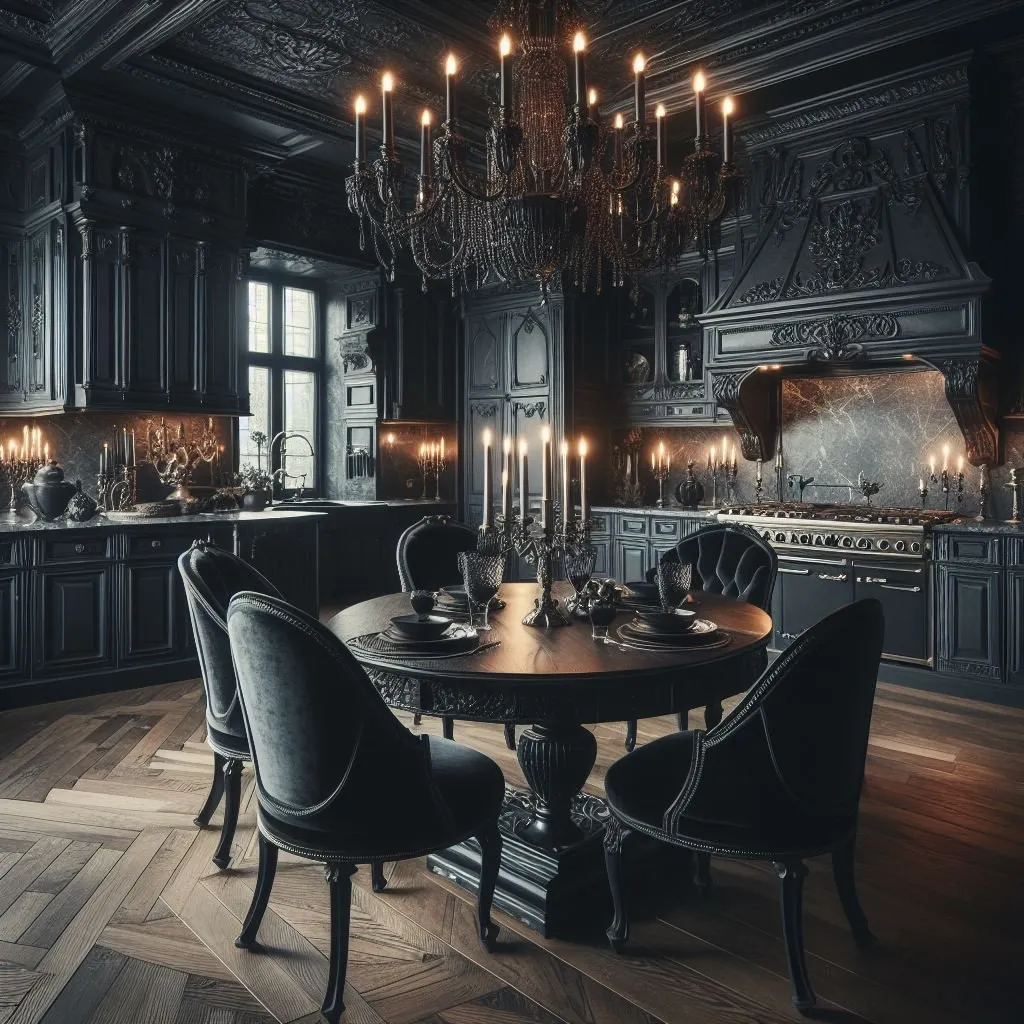
Understanding Gothic Kitchen Decor
Gothic kitchen decor is more than just a design trend; it’s a statement, a lifestyle, and a celebration of the dramatic. It involves creating a space that evokes a sense of mystery, history, and elegance. This design style often draws inspiration from the architectural elements of gothic cathedrals and castles, characterized by their pointed arches, intricate details, and imposing presence. The key to achieving a stunning gothic kitchen lies in understanding the core principles and incorporating them thoughtfully. It’s not simply about adding dark colors; it’s about creating a cohesive atmosphere that tells a story and reflects your personality. Successfully executing a gothic kitchen design requires careful consideration of color palettes, textures, lighting, and accessories, each playing a crucial role in bringing the vision to life.
The Essence of Gothic Design
The essence of gothic design is deeply rooted in its historical context. Originating in the medieval period, gothic architecture was characterized by its grandeur and its use of soaring heights, intricate detailing, and dramatic lighting. These elements are crucial when applying gothic design principles to a kitchen. The style often utilizes pointed arches, ribbed vaults, and ornate carvings, all of which contribute to its distinctive aesthetic. Gothic design also embraces a sense of the sublime, aiming to create a feeling of awe and wonder. This is often achieved through the use of dramatic contrasts, intricate patterns, and the skillful manipulation of light and shadow. Understanding these core elements will enable you to bring a touch of gothic elegance and history into your kitchen space, transforming it into a stunning and memorable environment.
Color Palette

The color palette forms the foundation of any gothic kitchen, setting the mood and tone for the entire space. The classic gothic palette often incorporates deep, rich colors that evoke a sense of drama and sophistication. Think of the colors found in ancient cathedrals and castles; dark, opulent shades create a mysterious and inviting ambiance. The key is to use colors that complement each other and create a cohesive look. While dark colors are predominant, incorporating lighter hues and metallic accents can provide a balanced and visually interesting design, ensuring the space doesn’t feel too heavy or oppressive. Consider the natural light in your kitchen and choose colors that will work with the existing light conditions, amplifying the gothic feel.
Dark and Moody Hues
Dark and moody hues are the cornerstone of a gothic kitchen’s color scheme. Colors like deep blacks, charcoal grays, rich burgundies, and forest greens create a sense of drama and luxury. These colors are often used on walls, cabinets, and even appliances to set the tone. When choosing dark hues, consider their undertones. Colors with warm undertones can create a cozier, more inviting atmosphere, while those with cooler undertones may provide a more sleek and modern gothic feel. The selection of colors should reflect your personal preferences and the overall ambiance you want to create. Experiment with different shades to achieve the perfect balance of darkness and elegance. Ensure the hues complement the space, allowing for a stunning visual experience, from cabinetry to wall decor.
Incorporating Textures
Textures are essential in creating a visually rich and engaging gothic kitchen. They add depth, complexity, and character to the space. The use of different textures helps to break up the monotony of a dark color palette, adding visual interest and tactile appeal. Consider incorporating a variety of textures to create a layered and dynamic design. Textures should be used thoughtfully to enhance the overall aesthetic and create a space that is both visually appealing and inviting. The interplay of different textures will bring your gothic kitchen to life, making it more than just a place to cook—it will be a place to experience the gothic atmosphere.
Velvet and Other Fabrics

Velvet is a luxurious and iconic fabric often associated with gothic design. Its soft, plush texture and rich appearance add a touch of opulence to any space. Consider incorporating velvet in your gothic kitchen through upholstered furniture, such as bar stools or dining chairs. Velvet curtains can also add a dramatic flair, enhancing the overall gothic ambiance. Other fabrics like damask, brocade, and textured linens can add depth and interest to the kitchen. These fabrics often feature intricate patterns that are characteristic of the gothic style. Using fabrics in your kitchen design can add a layer of comfort and sophistication, transforming it into an elegant and inviting space. Remember, texture plays a significant role in creating a visually stunning gothic kitchen.
Adding Gothic Kitchen Elements
Incorporating specific gothic elements is key to transforming your kitchen into a truly gothic space. This includes architectural details, furniture styles, and decorative items that are characteristic of the gothic aesthetic. Think about the design elements that define the gothic style, such as pointed arches, intricate carvings, and dark, ornate details. These elements can be incorporated into the kitchen’s design through the architecture, furniture, or decorative accents. By focusing on these key details, you can create a kitchen that is not only beautiful but also authentic to the gothic style. This approach requires a blend of practicality and design to create a space that reflects your style and enhances the room’s ambiance.
Choosing the Right Kitchen Cabinets
Kitchen cabinets play a crucial role in setting the tone of your gothic kitchen. Opt for cabinets with dark finishes, such as ebony, dark walnut, or even black. Consider cabinets with intricate carvings, ornate details, or a raised panel design, echoing the gothic architecture. The style of cabinets can further enhance the gothic aesthetic. For instance, cabinets with arched doors or pointed arches can add an authentic gothic touch. Think about the hardware; antique brass, wrought iron, or pewter hardware complements the dark cabinets, providing a cohesive look. The choice of kitchen cabinets is the foundation of a successful gothic kitchen design, setting the overall style.
Adding gothic accents

Incorporate gothic accents to enhance the kitchen’s ambiance. Consider adding elements such as wrought iron or ornate metalwork to your kitchen decor. These details are reminiscent of gothic architecture. Think about adding gothic-inspired lighting fixtures such as chandeliers with intricate designs. These details, alongside the color palette, can enhance the overall mood. Displaying antique or vintage items that complement the gothic theme, like ornate mirrors, will also add depth. The accessories provide a finishing touch to your gothic kitchen design. Selecting and arranging these accents thoughtfully will elevate the space, transforming it into a stunning gothic-inspired environment.
Embracing Gothic Lighting
Lighting is a crucial aspect of any gothic kitchen, creating the desired ambiance and highlighting the design’s key elements. Gothic lighting often features a combination of ambient, task, and accent lighting to create depth and drama. Consider using warm-toned bulbs to evoke a sense of mystery and warmth. The strategic placement of lighting can accentuate the architectural features, such as arches and ornate details. Moreover, appropriate lighting will enhance the ambiance of the kitchen, making it feel both inviting and visually stunning. The right lighting transforms your kitchen into an elegant space that is characteristic of the gothic style.
Chandeliers and Sconces
Chandeliers and sconces are essential in creating a gothic atmosphere. Opt for chandeliers with intricate designs and dark finishes, such as wrought iron or antique brass. These fixtures not only provide ambient lighting but also serve as a striking focal point in the kitchen. Sconces can be used to add accent lighting. They highlight key features, such as artwork, ornate mirrors, or architectural details. Consider sconces with candle-like bulbs or vintage-style shades. The choice of chandeliers and sconces should complement the overall design, enhancing the gothic ambiance. They are crucial for achieving a dramatic and elegant look. In your gothic kitchen design, these lighting choices will enhance your space.
The Importance of Hardware

Hardware, though a seemingly small detail, is incredibly important in a gothic kitchen, contributing significantly to the overall aesthetic. The choice of hardware should complement the cabinets and other design elements, creating a cohesive and sophisticated look. The correct hardware choices can enhance the ambiance of the entire kitchen. The careful selection of hardware can elevate the design. Remember, paying attention to these smaller elements can make your gothic kitchen decor truly remarkable.
Choosing Unique Hardware
Choose unique hardware to enhance the gothic style. Consider antique brass, wrought iron, or pewter hardware. These materials are often associated with the gothic period. These hardware choices can transform the overall feel. The selection of hardware should complement the cabinets. Select hardware that reflects the gothic era’s intricate designs and attention to detail. It is these small aspects that contribute to the uniqueness of the gothic kitchen. The right hardware will enhance the ambiance of your kitchen design.
Accessorizing with Gothic Style
Accessorizing is a crucial element in completing a gothic kitchen design. Carefully selected accessories add personality, depth, and a touch of drama to the space. The goal is to create a cohesive look that reflects your personal style. The choice of accessories should complement the existing color palette, textures, and design elements. Accessories help define the gothic theme. These choices are essential to achieve the intended gothic ambiance in your kitchen design.
Decorative Details

Decorative details can significantly enhance the gothic theme. Consider incorporating items such as antique mirrors, ornate picture frames, and gothic-inspired artwork. These elements can add a sense of history and drama. Display vintage or antique kitchen tools, or incorporate wrought-iron candle holders and candelabras, to accentuate the gothic ambiance. The details enhance the gothic aesthetic, adding complexity to your kitchen. You can create a kitchen space that is both stylish and personalized by incorporating such details. The careful selection and arrangement of decorative elements bring the gothic design to life.
The Final Touches
Once you’ve completed the major elements of your gothic kitchen design, it’s time for the final touches. These are the details that will bring the entire design together, creating a cohesive and visually stunning space. These finishing touches should reflect your personal style and create a cohesive look. The final touches are those that make your gothic kitchen design complete. The final touches are essential to the gothic kitchen’s ambiance. These details are vital to achieving a remarkable and captivating gothic kitchen design.
Creating the Perfect Ambiance
Creating the perfect ambiance is essential in achieving a truly gothic kitchen. Consider the overall mood you want to create and use lighting, color, and accessories to achieve it. Warm lighting can create an inviting and cozy atmosphere, while dark colors can create drama and sophistication. Incorporate gothic-inspired artwork and decorative details to enhance the ambiance. Every element in your kitchen will contribute to the desired ambiance. With careful planning and thoughtful execution, you can transform your kitchen into a stunning and unforgettable gothic space. The final touches create the perfect gothic ambiance.