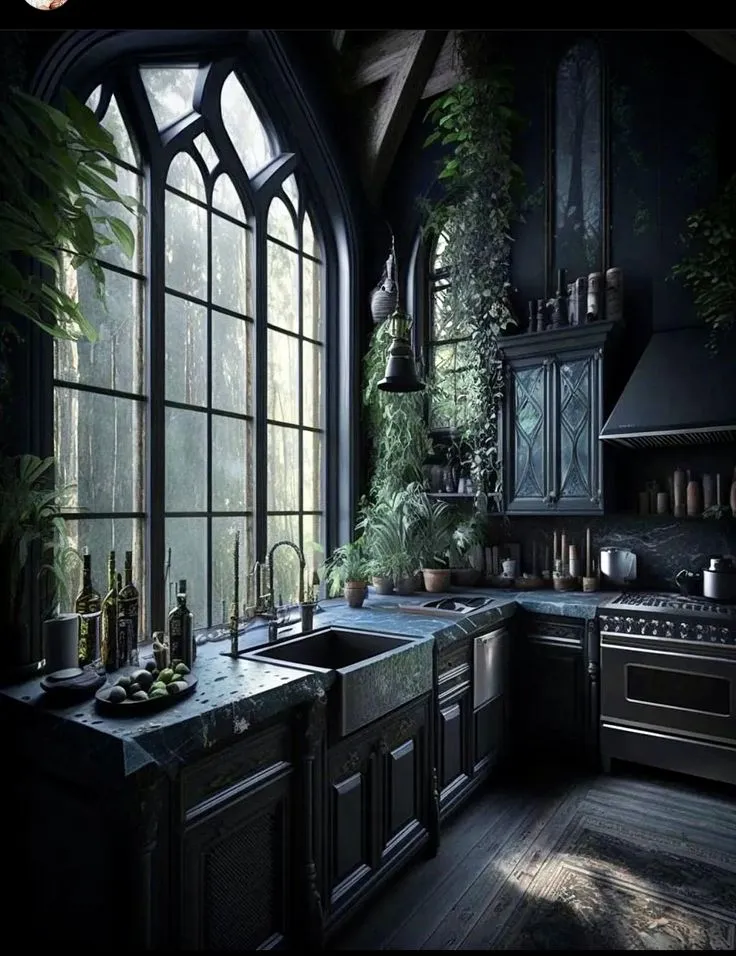
Gothic Kitchen Decor: What Defines the Style?
Gothic kitchen decor is more than just a trend; it’s a bold statement of personal style. It’s about embracing the beauty of darkness, the allure of historical references, and the elegance of unique details. This style moves away from the typical light and airy kitchens, offering instead a space that is both dramatic and inviting. It’s a fusion of classic Gothic architecture, with its pointed arches and ornate details, and modern sensibilities, creating a space that is both timeless and relevant. The key is to understand the core elements that make up the gothic aesthetic, then incorporate them into your kitchen design. This includes a specific palette, the choice of materials, the right lighting, and the perfect accessories to tie it all together. The goal is to create a kitchen that feels both sophisticated and deeply personal, a space that tells a story and evokes a sense of mystery and intrigue.
Dark Colors and Moody Palettes
The foundation of a gothic kitchen is a dark, moody color palette. Think deep blacks, charcoal grays, and rich jewel tones like emerald green, deep ruby, and sapphire blue. These colors create a sense of drama and intimacy, perfect for a kitchen that’s meant to be a sanctuary as well as a workspace. The use of these colors doesn’t mean your kitchen has to feel small or closed-in. The key is to balance them with lighter accents, such as metallic hardware or light-colored countertops, to prevent the space from feeling overwhelming. Another important aspect is the use of matte finishes over glossy ones, as the matte finish will add depth without reflecting too much light, enhancing the moody atmosphere. Consider painting your cabinets in a deep charcoal or your walls in a rich, dark green. These darker elements provide an excellent backdrop to highlight other elements, such as your accessories, the materials, and the lighting.
Rich Woods and Textures

To counter the darkness, incorporate rich woods and varied textures. Dark stained wood cabinets, floors, or even exposed beams can add warmth and character to your kitchen. Opt for woods with pronounced grains and textures, such as reclaimed wood or woods with a natural finish, to add visual interest. The textures don’t stop at the wood; consider adding textured tiles for your backsplash, or a stone countertop. The interplay of different textures adds depth and sophistication to the space, making it feel more layered and inviting. Remember that the goal here is not to make the space completely dark. The wood brings a sense of nature and the outdoors to contrast with the darker colors. The textures create a tactile richness that the eye is also looking for, making the kitchen feel like an experience, not just a room.
Statement Lighting and Fixtures
Lighting is crucial in a gothic kitchen, as it can enhance the mood and set the tone. Instead of bright, overhead lighting, opt for a mix of ambient, task, and accent lighting. Consider using chandeliers with dark, ornate designs, or pendants with a vintage feel to add a touch of drama. Sconces with dark metal finishes and Edison bulbs can add a warm, inviting glow. Layering different types of lighting will create depth and prevent the kitchen from feeling flat or overly dark. The right lighting will create a sense of mystery, highlighting specific areas and creating pockets of light and shadow. These layers of light are not only functional, but they are also an essential aspect of the gothic aesthetic. They help to draw attention to the beauty of the kitchen design, and also create the overall ambiance of the kitchen, transforming the space into a mood-setting environment.
Incorporate Metals
Metals are essential in gothic kitchen decor. Think about adding accents that complement the darker tones, such as iron, pewter, or even antique brass. These metals can be incorporated through hardware, fixtures, or even decorative elements. For example, use wrought iron cabinet pulls, a pewter faucet, or a brass pot rack. The metallic accents add a touch of elegance and visual interest, breaking up the darkness and adding a touch of sophistication. Make sure that the metal finishes are consistent throughout the kitchen to create a cohesive look. Using metals allows a gothic kitchen to retain its modern aspects because they are found in a lot of contemporary designs. This contrast between traditional and modern aesthetics is very important, as it creates a kitchen that is uniquely gothic, but also very current.
Gothic Kitchen Decor: Key Elements

Urban Outfitters Inspiration
Urban Outfitters often features pieces that perfectly align with gothic aesthetics. Their selection of home decor often includes items with dark colors, vintage-inspired designs, and a touch of the unusual. Look for inspiration in their lighting fixtures, which often feature dark metal finishes and unique shapes. Their textiles, such as throws and curtains, can also add a touch of gothic flair. Consider using their decorative items, such as antique-looking candle holders, or even their selection of ceramics and kitchenware to accessorize your kitchen. This store offers a mix of vintage and contemporary elements, which are excellent for the gothic kitchen design. The unique character of their items can perfectly complement your kitchen, and even inspire you to create the perfect space.
The Role of Textiles
Textiles play a significant role in softening the gothic aesthetic and adding comfort. Use rich fabrics like velvet, brocade, or damask in your kitchen. This can be done with curtains, seat cushions, or even a table runner. These fabrics add a touch of luxury and warmth, creating a contrast with the harder surfaces. Consider using patterned textiles, such as those with floral, or even gothic motifs. The textiles are also very good for adding a splash of color to the kitchen. You can use darker colors, or even jewel-toned options. Just make sure that the colors and patterns complement each other, creating a harmonious space.
Accessorizing with Gothic Flair

Accessories are where you can truly express your personal style. Look for items with vintage or antique charm, such as old books, antique candlesticks, and ornate mirrors. Choose items with dark, moody colors, or those with a touch of the macabre. This could include a skull-shaped soap dispenser, or a black ceramic vase. You don’t have to fill your kitchen with gothic-themed accessories; a few carefully chosen items can go a long way in creating the right atmosphere. Don’t be afraid to mix and match styles. The contrast of vintage with modern design is what makes a gothic kitchen unique. It is the details that pull the space together, creating a cohesive yet highly personalized design.
Selecting the Right Furniture
When selecting furniture, opt for pieces that complement the overall gothic style. This might include a dark wood kitchen island, or a table with ornate legs. Vintage or antique furniture pieces can add a touch of history and character. The important thing is to choose furniture that reflects the same color palette as the rest of the space. Also, consider the materials. Using materials like wrought iron, or even a dark stone, is great for achieving a gothic look. Make sure that the pieces are functional and practical. Balance the aesthetic with functionality to have a space that is truly gothic, but still easy to use for everyday tasks.
How to Achieve a Pro Look?
Planning and Preparation

Before you start, it’s essential to plan your gothic kitchen design carefully. Consider your existing kitchen layout and the amount of natural light. Sketch out your ideas, create a mood board, and gather inspiration from various sources, such as magazines, websites, and Urban Outfitters. This will help you visualize the final look and ensure that all the elements work together. Planning includes the materials, the colors, and accessories. It is essential to take into consideration the dimensions of the kitchen. This will prevent errors from happening that can be very costly. The final look will require you to carefully select the elements, so the first step is always to plan.
Color Combination
Choose your color palette wisely. Start with a base color and add complementary colors to create depth and interest. Dark colors will be the foundation of your design, while lighter accents will create contrast. Make sure that all your colors complement each other. It can be useful to use a color wheel or a color palette generator. These tools can help you to choose combinations. The selection of colors is the most important part of this process. This will set the mood, and determine the whole feeling of the kitchen. It will also determine the accessories and the furniture that you will need to acquire.
Choosing Accessories
When selecting accessories, focus on quality over quantity. Choose items that reflect your personal style and create a cohesive look. You can make your kitchen very unique with the right accessories. Consider incorporating antiques, vintage finds, or unique pieces. Items like antique candlesticks, dark-colored ceramics, or even art with gothic themes can add personality and drama. The accessories are the final touch. With the right items, you can create a gothic kitchen that is the perfect expression of your personality.
Bringing It All Together

Once you have planned and gathered all the elements, it’s time to bring everything together. Start by painting the walls and installing the cabinets. Then, add the furniture and accessories. Layer the lighting to create the desired mood. Finally, add the textiles to create warmth and comfort. Remember to take your time, and don’t be afraid to experiment. Sometimes, the best designs evolve over time. The key is to have fun and enjoy the process of creating your perfect gothic kitchen. It is best to take photos as you go. This will help you track your progress, but also provide the perspective needed to keep your vision on track.
Gothic Kitchen Decor: Maintenance and Upkeep
Maintaining a gothic kitchen is relatively straightforward. Regular cleaning is essential to keep the space looking its best. Use appropriate cleaners for the materials, such as wood, metal, and stone. Dust frequently to prevent dust build-up, and wipe down surfaces to keep them clean. When it comes to maintenance, address any issues, such as scratches or damages. By taking care of these elements, you can preserve the beauty and the atmosphere that you worked so hard to achieve. The more care you take of the space, the longer it will last, and the better it will look. Regular maintenance and upkeep ensure that your gothic kitchen remains a stunning and inviting space for years to come.