Choosing the Right Quartz Countertop for Your Kitchen
Quartz countertops have become a staple in modern kitchens, offering durability, beauty, and a wide range of design possibilities. Selecting the right quartz for your kitchen involves careful consideration of several factors to ensure it complements your overall aesthetic and meets your functional needs. From understanding the various color options and patterns to assessing the best edge profiles and maintenance requirements, the process can seem daunting. This article provides six essential tips to guide you in decorating your kitchen with quartz countertops, transforming your space into a stylish and practical haven.
Consider Kitchen Style and Color Palette
The first step in decorating with quartz countertops is to define your kitchen’s style and color palette. Quartz comes in an extensive array of colors and patterns, from solid hues to veined designs that mimic natural stone. For a modern kitchen, consider sleek, minimalist quartz in shades of white, gray, or black. These colors provide a clean backdrop that enhances the contemporary aesthetic. If your kitchen is more traditional, explore quartz with subtle veining and warmer tones, like beige or cream. Assess your existing cabinetry, flooring, and wall colors to create a cohesive design. Consider the overall mood you wish to create – is it bright and airy, or warm and inviting? The color and pattern of your quartz should complement and enhance these elements, ensuring a harmonious and visually appealing space. Understanding your style will narrow down your choices and simplify the selection process.
Matching Quartz with Cabinetry

Cabinetry plays a crucial role in defining the kitchen’s overall look, so matching your quartz countertops to your cabinets is essential. For lighter-colored cabinets, like white or light gray, you can choose a quartz countertop in a contrasting color to create visual interest. Darker quartz with veining can add depth and sophistication, while solid colors offer a clean, modern look. With darker cabinets, consider lighter quartz to brighten the space. Ensure the undertones of your cabinets and quartz complement each other; warm-toned cabinets pair well with quartz in beige or cream, while cool-toned cabinets look best with gray or white quartz. Take samples of your cabinet doors to the showroom and place them next to different quartz slabs to see how they look together in various lighting conditions, guaranteeing a perfect match.
Selecting Backsplash Options
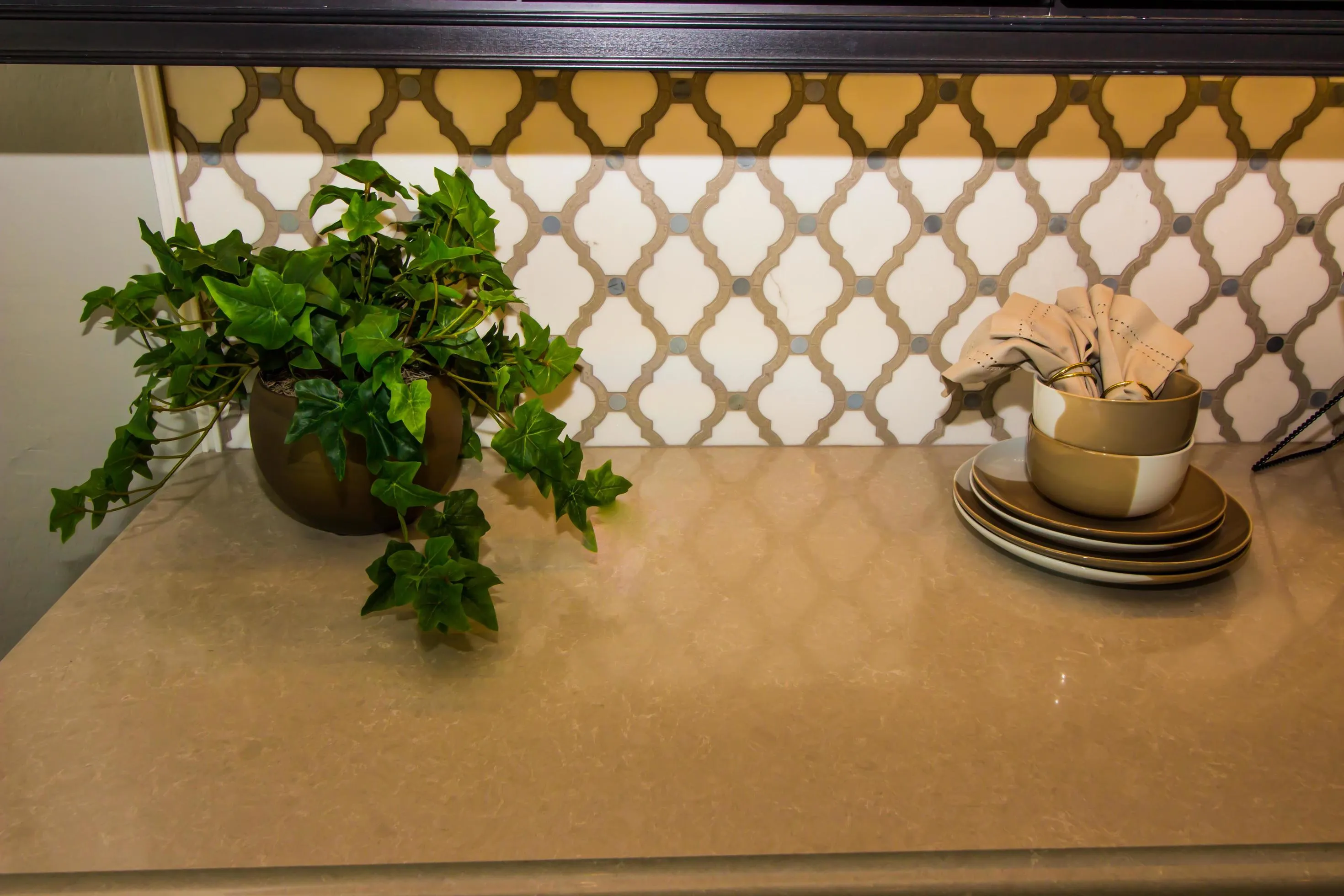
The backsplash is another critical element that significantly impacts the overall design of your kitchen. The backsplash ties together the countertops and cabinets, creating a cohesive look. When selecting a backsplash to complement your quartz countertops, consider the pattern and color of the quartz. If your quartz is heavily veined, choose a simpler backsplash to avoid visual clutter. A solid-colored backsplash in a neutral tone will allow the quartz to be the focal point. If your quartz is solid, you can experiment with more elaborate backsplash designs, such as patterned tiles or mosaic. Consider the material of your backsplash as well; glass tiles can add a modern touch, while subway tiles offer a classic look. Ensure the colors and textures of the backsplash and quartz complement each other, creating a balanced and harmonious design that elevates your kitchen’s aesthetic appeal.
Exploring Different Quartz Edge Profiles
The edge profile of your quartz countertop can significantly impact the kitchen’s overall aesthetic. The edge profile is the shape of the countertop’s edge, visible on the front and sides. Common edge profiles include the simple eased edge, which has slightly rounded corners, the more decorative bullnose edge with a rounded profile, and the sleek, modern square edge. Each profile offers a different look and feel. The eased edge is versatile and suits most kitchen styles, while the bullnose edge adds a touch of elegance. A square edge creates a contemporary look. Consider the style of your kitchen when choosing an edge profile; a minimalist kitchen might suit a square edge, while a traditional kitchen might benefit from a bullnose or a beveled edge. Also, consider the functionality of each profile; rounded edges are often safer in high-traffic areas. The edge profile is a detail that enhances the overall design and should be selected thoughtfully.
Accessorizing with Kitchen Hardware

Hardware such as cabinet pulls, knobs, and faucets should complement your quartz countertops and the overall kitchen design. The hardware provides the finishing touch and enhances the visual appeal of your space. When selecting hardware, consider the color and finish that best suit the quartz and cabinetry. If you have dark quartz and light cabinets, consider using brushed nickel or chrome hardware for a modern look. For a more traditional kitchen, brass or copper hardware can add warmth and elegance. The style of your hardware should align with the overall design. For example, sleek, minimalist pulls complement modern designs, while ornate knobs are suited for traditional kitchens. Ensure that all hardware elements coordinate in terms of finish and style to create a cohesive and polished look. The right hardware can significantly elevate the overall aesthetic and create a cohesive design.
Coordinating with Kitchen Appliances
Appliances play a significant role in the kitchen’s overall aesthetic, so coordinating them with your quartz countertops is vital. Stainless steel appliances are a popular choice and pair well with various quartz colors, offering a sleek, modern look. Black stainless steel appliances can add sophistication and contrast. When choosing appliances, consider the finish and design. The appliances’ color and style should complement the quartz and cabinetry. If you have a lighter quartz, dark-colored appliances can create a striking contrast, while stainless steel or white appliances blend in seamlessly. The details of the appliances, such as handle styles and design elements, should align with the overall kitchen design. Ensuring that appliances complement your countertops and other design elements creates a harmonious and visually appealing space.
Optimizing Natural and Artificial Lighting
Lighting plays a crucial role in showcasing your quartz countertops, influencing how color and pattern are perceived. Optimizing both natural and artificial lighting is essential for maximizing the beauty and functionality of your kitchen design. Natural light from windows and skylights can highlight the details of the quartz and create a bright, inviting atmosphere. Make sure that your kitchen has ample access to natural light. Complement natural light with various artificial lighting sources, including recessed lighting, pendant lights, and under-cabinet lighting. Recessed lighting provides general illumination, while pendant lights over the island add style and task lighting. Under-cabinet lighting illuminates the countertop, making it easier to work while highlighting the quartz’s texture and color. Consider the color temperature of your light bulbs; warm white lights can create a cozy atmosphere, while cool white lights offer a more modern feel. Proper lighting enhances the beauty of the quartz and improves the overall functionality of your kitchen.
Decorating for Functionality and Aesthetics

Choosing the Right Quartz for Prep Zones
When decorating your kitchen with quartz countertops, consider the zones where you do most of your food preparation. The countertop in the prep zone should be functional, easy to clean, and aesthetically pleasing. Opt for quartz colors and patterns that complement the cabinetry and backsplash. Ensure the surface is resistant to stains, scratches, and heat. Choosing a lighter color with a subtle pattern can hide imperfections. Having a durable and visually appealing surface in the prep zone makes cooking more enjoyable and enhances the overall kitchen design. A well-chosen quartz countertop combines functionality and style.
Selecting Quartz for High-Traffic Areas
Kitchens are high-traffic areas, so it’s important to select quartz countertops that can withstand heavy use. Countertops on the island or near the sink are particularly susceptible to spills and wear. For these areas, choose a quartz that is highly durable, stain-resistant, and easy to clean. Darker colors or those with patterns can often hide imperfections better. The edge profile can also play a role in durability; rounded edges are less prone to chipping than sharp edges. Consider the lifestyle and usage patterns in your kitchen when selecting quartz. High-traffic areas require a durable surface that maintains its beauty and functionality over time.
Quartz Countertop Maintenance and Care

Regular Cleaning and Maintenance
Regular cleaning is essential to maintain the beauty and longevity of your quartz countertops. Use a mild dish soap and water to clean the surface daily, wiping spills promptly to prevent stains. Avoid abrasive cleaners, scouring pads, and harsh chemicals, which can damage the surface and dull the finish. To clean the countertops, use a soft cloth or sponge. Rinse the surface thoroughly with clean water after cleaning to remove any soap residue. For tougher stains, you can use a specialized quartz cleaner, following the manufacturer’s instructions. Regular maintenance ensures that your quartz countertops remain in excellent condition and continue to enhance your kitchen for years to come. Always follow manufacturer guidelines for cleaning and care.
Protecting Quartz from Heat and Damage
While quartz is heat-resistant, it is not entirely heat-proof. To protect your quartz countertops from heat damage, use trivets or hot pads under hot pots, pans, and appliances. Sudden temperature changes can cause thermal shock, potentially leading to cracks. Be cautious when placing hot items directly on the surface. Use cutting boards to prevent scratches, as quartz can be scratched by sharp objects. Avoid placing heavy objects on the edges of the countertops, as this could cause chipping. Protecting your quartz countertops from heat and damage preserves their beauty and ensures their longevity, keeping your kitchen looking its best for years to come.
Quartz Countertop Design Inspiration

Modern Kitchen Design Ideas
For a modern kitchen, consider quartz countertops with clean lines, sleek surfaces, and minimalist designs. Choose solid colors like white, gray, or black. Pair your quartz with flat-panel cabinetry in neutral tones or high-gloss finishes. Incorporate stainless steel appliances and hardware for a contemporary look. Use under-cabinet lighting and pendant lights to enhance the space. Focus on functionality and simplicity to create a streamlined, modern aesthetic. Avoid excessive ornamentation and embrace a clean, uncluttered design. A modern kitchen is designed for efficiency and style, creating a sophisticated and functional space. The right quartz selection enhances the design and contributes to the contemporary vibe.
Classic and Traditional Kitchen Designs
Classic and traditional kitchens often benefit from quartz countertops with subtle veining or patterns that mimic natural stone. Choose warm tones like beige, cream, or light brown to create a cozy atmosphere. Pair your quartz with raised-panel cabinetry, ornate hardware, and a traditional backsplash, such as subway tiles. Consider using a bullnose or ogee edge profile to enhance the classic look. Incorporate elements like crown molding and detailed trim for a touch of elegance. The goal is to create a timeless design that exudes warmth and sophistication. The choice of quartz and other design elements contributes to a traditional kitchen’s enduring appeal, ensuring it remains stylish for years.
Transitional Kitchen Decor Styles

Transitional kitchen designs blend elements of both modern and traditional styles. This approach creates a balanced and versatile space. Use quartz countertops with moderate veining or patterns, opting for neutral colors like gray or white. Pair your quartz with shaker-style cabinets. Incorporate a mix of modern and traditional hardware, such as sleek pulls and classic knobs. Use a backsplash that complements both styles, such as a neutral tile with subtle patterns. Consider a combination of recessed lighting and pendant lights. Focus on creating a space that is both functional and stylish, combining clean lines with classic details. A transitional kitchen offers the best of both worlds and is perfect for those seeking a balanced design. The choice of quartz and other design elements is vital for creating a harmonious and aesthetically pleasing space.
In conclusion, decorating your kitchen with quartz countertops involves careful planning and consideration of various factors. Choosing the right quartz color, pattern, edge profile, and coordinating it with cabinetry, backsplash, and hardware creates a stunning and functional kitchen. Proper maintenance and care are crucial for preserving the beauty and longevity of your countertops. Whether you prefer a modern, classic, or transitional style, quartz offers endless design possibilities. By following these tips, you can transform your kitchen into a stylish and practical space that reflects your personality and enhances your home.